
For Gary Waterman, Again: I Ran Your Method to the End of the Register
You taught me to type a name into Companies House and follow the addresses. I did. It led to a company older than the register itself — and then to a door I never wanted to open: your own.


A few weeks ago I wrote to Gary Waterman to tell him I believed I had found his missing link. I meant it then and I mean it more now. Gary is not a shouter. Gary sits you down, opens a government website, and shows you — patiently, in public, with his own cursor — how it all connects. The same names. The same addresses. The same quiet hands behind a hundred doors. He taught a great many of us to look. He taught me.
So I did what he does. I took the one name I have come to fear above all others — the sending department, the office, the thing I will only call The Partner — and I typed it into Companies House. And then I followed the addresses, the way Gary taught me, and I did not stop for two days.
What I found I can barely set down with a steady hand. Let me show you, the way he would.
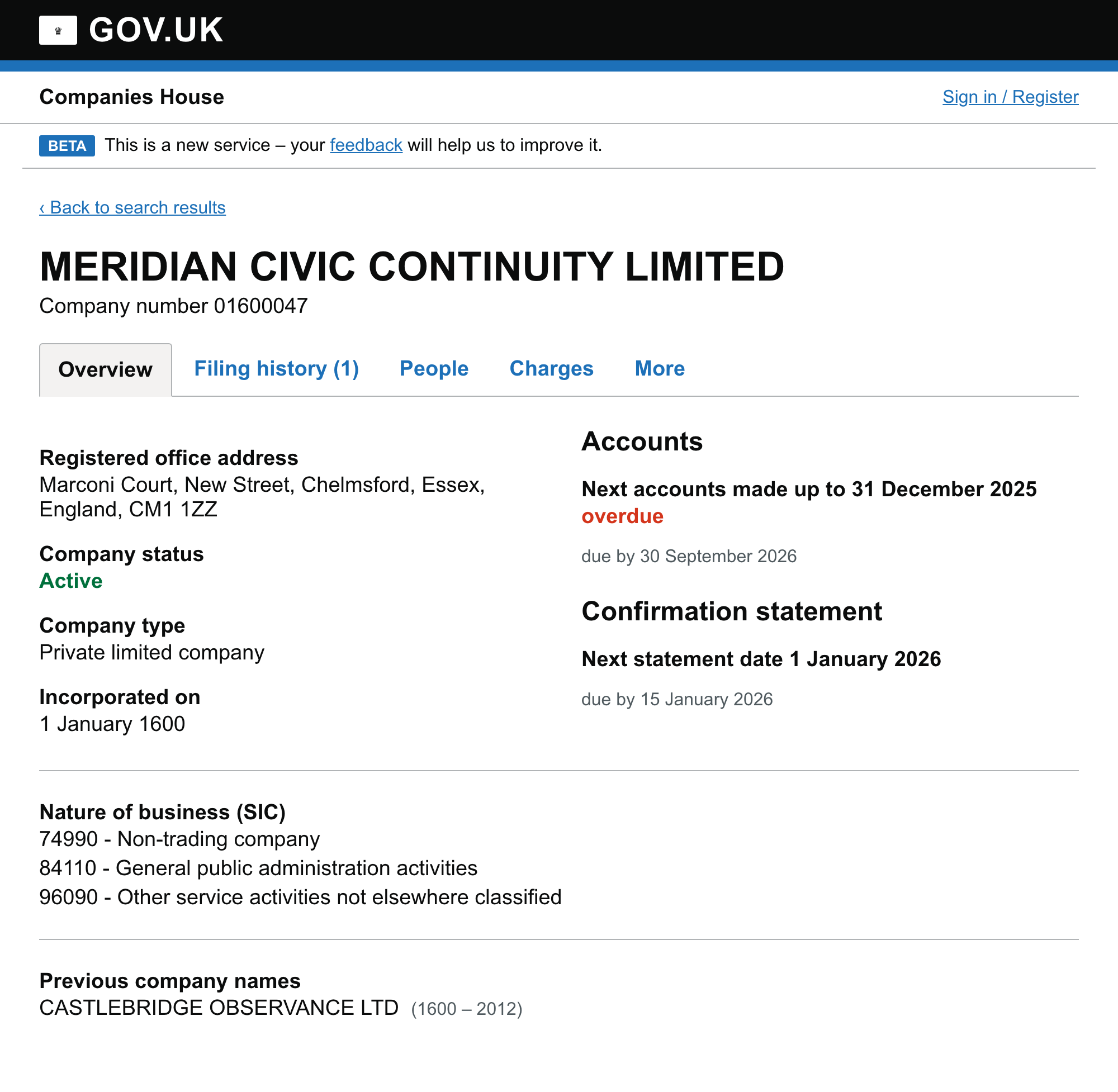
Older than the record. A firm that was already old when the office that files it was not yet a thought. And I know what the clever ones will say — a clerical error, a default date, a glitch in some old migration. I said it too, for about a minute. Then I looked at the people.
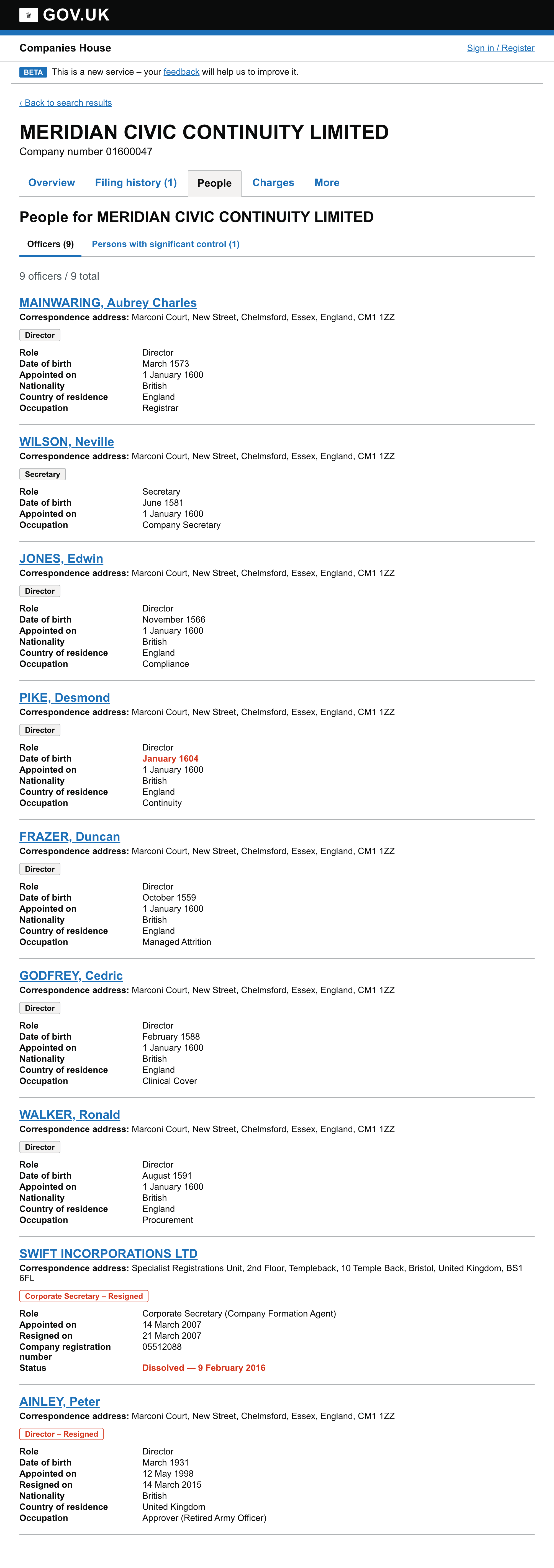
Look at them. Mainwaring. Wilson. Jones. Pike. Frazer. Godfrey. Walker. Directors of a company for four hundred and twenty-six years, and not one has ever stood down, retired, or — I choose the word with care — died. Born in the fifteen-hundreds. Still filing. Every one of them at a single address, a court in Chelmsford, which is Gary's "same address, everybody" — his exact tell — only stretched across four centuries instead of four streets. There is a Pike here whose date of birth is 1604: four years after he was appointed. A man made a director before he was born. I did not put that there. The register did.
Only one of them ever left. A Lieutenant Colonel, Ainley — the single modern name among the immortals, appointed in 1998, resigned in 2015. The one who was mortal. The one who could stop. I have thought about him more than is healthy.
And I would have left it there — a marvel, a horror, a thing to lie awake over — except that Gary's method does not permit you to leave it there. Gary's method says: follow the one thread that does not fit. And there was one. In amongst four hundred years of the same six deathless men, one modern name. Not a director. The registrar. The little firm that set the shell up and signed off a week later, the way these formation outfits do — Swift Incorporations, a company-mill that stamped out businesses by the thousand until Companies House took the work in-house and Swift was quietly wound up in 2016.
And here, Gary, is where I must speak to you directly, because I did the thing you taught me, and it led somewhere I did not want it to lead.
I checked what else Swift Incorporations had registered. And Swift Incorporations — that little, dissolved company-mill — is the same firm that registered your own Exbourne Manor Freehold. Your company, Gary. The freehold. The keystone — the very company you have spent years building your whole map around. The same desk that conjured their four-hundred-year-old shell conjured your manor, and then somebody dissolved the one firm that could have told us so, and now you cannot check it, and neither can I. You of all people have taught us what it means when the single record that would prove a thing is the single record that is gone. I am only holding up the mirror.
I am not going to tell you what it means. You never tell us what it means; you let the connection sit there, and you let the viewer's own blood run cold. I will do you the courtesy of the same. I will say only that, of all the men in England who might happen to share a registrar with a firm older than the register itself, it is you — and that this is either the emptiest coincidence in the world, or it is not, and you have spent your whole life teaching me there is no such thing as the emptiest coincidence in the world.
And I would have stopped there. I nearly did. Except Gary's method has one more turn left in it, and it is the cruellest one of all. You do not only ask what a firm has registered. In the end you have to ask the other question — the one that goes up instead of across: who registered the firm? Who set up the little company-mill that set up your manor and set up their shell? So I asked it of Swift. And the answer was another firm — older, greyer, quieter still — a formation agent by the name of Marchmont & Sons Registrations.
And Marchmont & Sons is where the floor gives way beneath you. Because two years ago, when I first started pulling at all of this, I had the sense — or the luck — to save Marchmont's own certificate of incorporation. Its founding document. The single sheet that records the moment the company came into being. I saved it, thank God, because like every other honest record in this story it is no longer there to be found. Here it is. Do not read it for the date. Read it for the name.
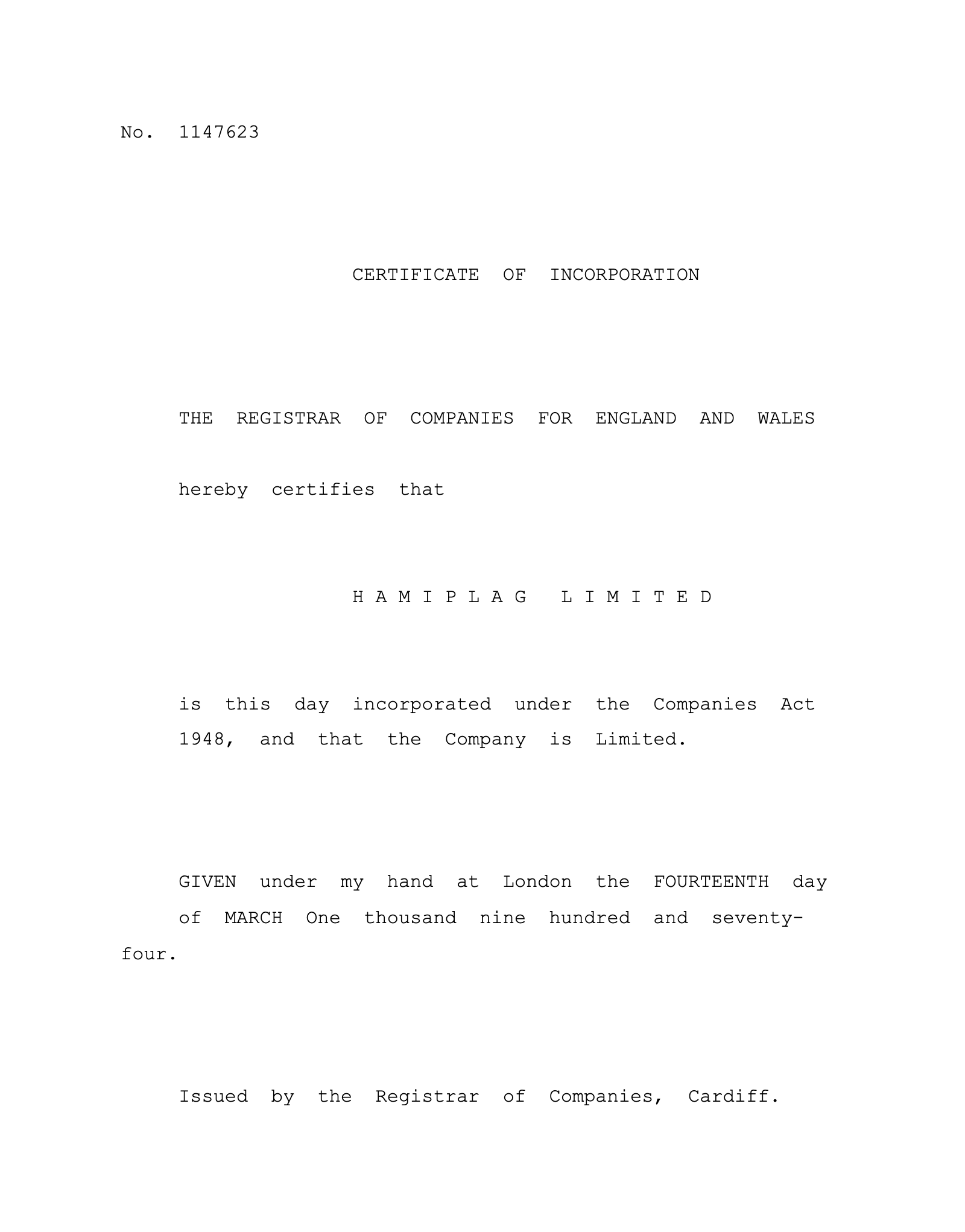
A registrar that is itself falsely registered. Sit with that, Gary, because it is the whole rotten geometry laid out in a single line. Marchmont — which is really Hamiplag, which is really nobody at all, a made-up word on a fifty-year-old certificate — set up Swift. And Swift set up their deathless four-hundred-year-old shell, and set up your Exbourne, and — as I showed you only the other day, when I followed a certain smiling, reassuring reputation-man to his own front door — Swift signed his reputation firm into being too, then resigned itself out of it within the week, the way it always does. One little poisoned root, put down in 1974 under a name that means nothing, and everything that has grown out of it since — the Partner's cover, your keystone, the shill's alibis — grew up out of the very same soil.
And then the last of it. The part that made me get up and walk the length of the flat and sit back down. Go to Companies House now, tonight, and type in the number of their shell — 01600047 — and see what you are given.
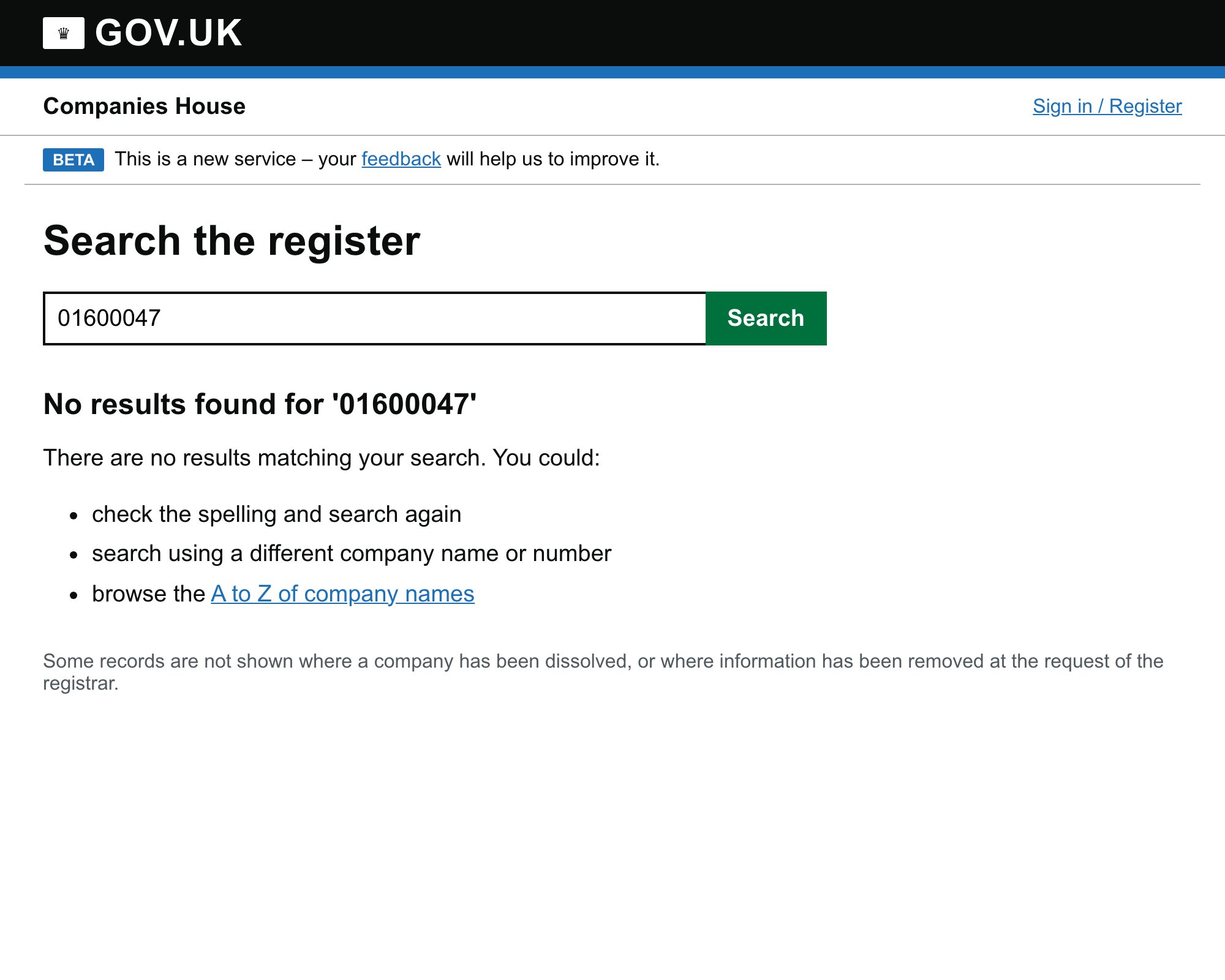
Gone. Removed at the request of the registrar. And I ask you the only question that matters — the one you taught me to ask: who is able to remove a company from the register? Not you. Not me. There is exactly one kind of body on this earth that can quietly lift a company off a government database: the body whose entire business is the government's databases. They did not hide. They simply reached into the drawer that is theirs to reach into, and they closed it.
They scrubbed it from the register the rest of us can check. They did not think to scrub the one they keep themselves. It is still there — if you know the beige little corner of the internet to look in — listed plainly on their own books: here. Go quietly. I make no promises about how long that stays up either.
You taught me the method, Gary. I have only followed it to the one door you never thought to try — your own — and found the same hand on the frame that is on all the others. I am sorry. I did not want it to be your door. But a man does not get to choose which doors the method opens for him.
— R.S.