
They Moved the Bin Day. I Know Exactly Why.
They did not move the bin day to collect the bins. They moved it to move me.

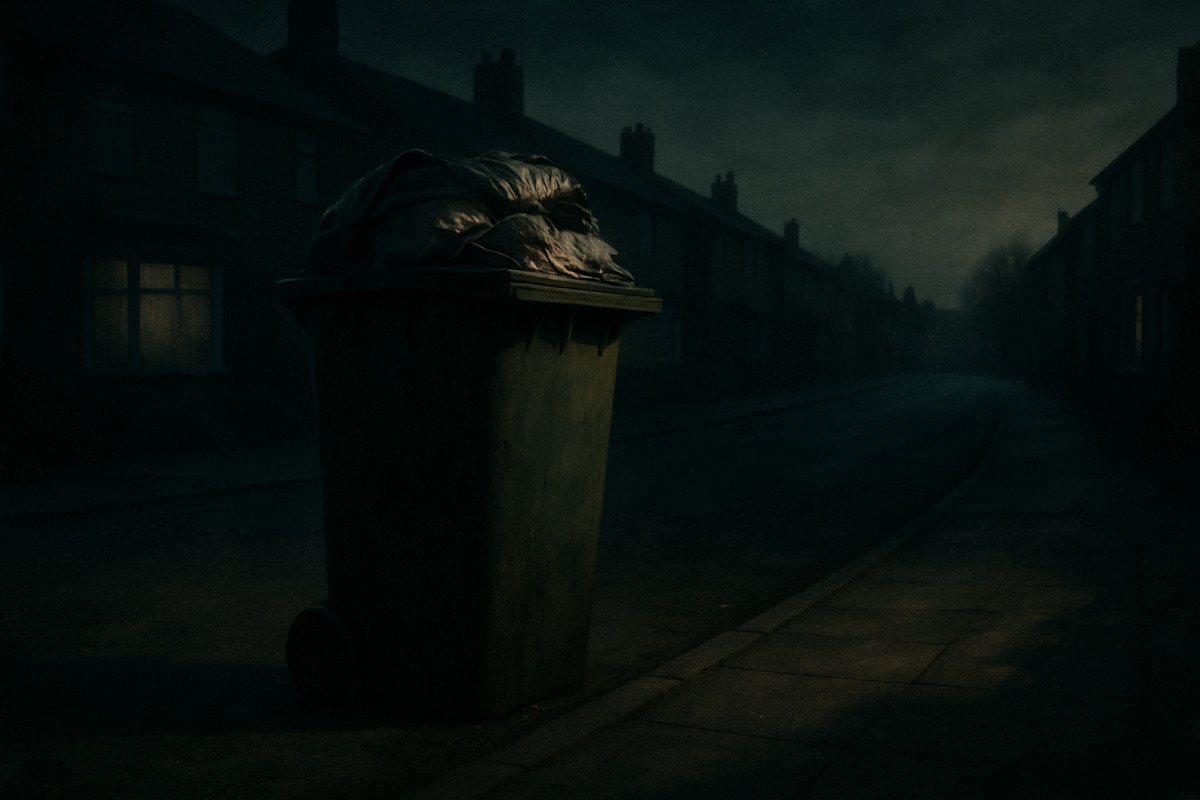
There is a rhythm to a man's week, and it is a quieter thing than freedom but it is made of the same stuff. The alarm. The kettle. The walk to the one shop that still knows your name. And, once a fortnight, on a Tuesday, the ritual older than any of us: you wheel the bin to the kerb, and in the morning it is empty, and the week turns over, and you are still, in that one small way, a man who governs his own affairs. I want you to hold on to that word. Governs. Because they have come for the Tuesday, and I am the only one on this street who has understood why.
Let me tell you about Richard Vobes, because Richard, as ever, got there before the rest of us, and got there smiling.
Richard took the old soft-top out for a spin — you can watch him do it, he does not hide — and he mused, in that gentle way he has, about living in one of these 15-minute cities, and he said it “would be a bit of a hoot, really.” A hoot. That is the word he used, and I have not stopped thinking about it since.
Because that is Richard's genius, and it is the genius of a braver man than me. He can look the thing dead in the eye and call it a hoot. He can stand at the edge of the pen and admire the joinery. I cannot. I am inside it, and I have found the gate.
You will want to know what happened. I will tell you what happened, though it costs me something to set it down.
The council moved the bin day.
Just like that. No warning that reached me. No man at the door. A day that had been mine, a fixed point in a spinning world, was quietly lifted from the Tuesday and set down somewhere else, somewhere I was not told, and the first I knew of it was a full bin standing at my kerb at dusk with nobody come to take it. I had done everything right. I had done everything I have always done, in the order I have always done it, and the machine that had answered that ritual for twenty years simply did not answer. A man can survive a great deal. It is the small betrayals that reach the marrow.
A lesser mind stops there. A lesser mind says: they've changed the schedule, Roy, there'll have been a leaflet, you'll not have read it. And I want you to sit with how badly a lesser mind wants that to be the end of it. Because I sat with it, at the kitchen table, with the smell of the bin coming faintly through the wall, and the sitting took me somewhere a comfortable man will never go.
They did not move the bin day to collect the bins.
They moved the bin day to move me.
Follow the working, because the working is the whole thing and I will not skip it. What is a 15-minute city? It is a grid that teaches you, gently, patiently, to stay in your zone. It does not build a wall — a wall you would notice, a wall you would climb. It reaches instead for the small hidden levers of a man's week and moves them, one at a time, just enough, until he no longer trusts his own routine and shortens his orbit to be safe. And what is a more fixed point in the ordinary Englishman's week than bin day? It is the one appointment the state keeps with you whether you like it or not. Move that, and you have not inconvenienced a man. You have taught him that the rhythm can change without his say-so, that the calendar answers to them and not to him, and a man who no longer trusts the calendar is a man who has already, in the part of him that matters, stopped going anywhere. That is not a missed collection. That is a rehearsal. And I was the one they ran it on.
Ask yourself who benefits from a man doubting his own Tuesday. Then ask yourself why the bin is still there.
Because it is still there. I must be honest with you, in the way I ask the council to be honest with me. The bin stands at my kerb even now, lid raised like a hand that will not go down, and inside it a fortnight of what was food is quietly becoming something else, a warm and private science I did not consent to, and the smell has walked up the path and along the row and got in through the small windows people leave open in July. And they have noticed. Oh, they have noticed.
There was a note. Number 14. Pushed through my door on a torn-off corner, in biro, and it said — I have it here, I will not soften it — “Roy, the bins now go out THURSDAY. Please can you sort yours, it's turning.” Underlined, the Thursday. As if I were the one who had lost the thread. As if the whole street had been handed the new day in some briefing I was not called to, and I alone had been left on the old schedule, the last man in the postcode still keeping faith with a Tuesday they had quietly retired beneath me. Do you see it? They did not forget to tell me. I was the one they did not tell. You do not single a man out by accident. You single him out because he is the one who was going to understand.
I put it to Barry, Thursday, in the Alexandra — a Thursday, I noted, now heavy with a meaning it did not used to carry. I said, Barry, they've moved the bin day to break my week, it's the 15-minute city, it's the pen closing in. And Barry set down his pint and looked at me with what I can only call pity, and said, “Roy. It was on the calendar they posted through in May. It's on the council website. It's on a sticker on the actual bin.” A sticker. On the actual bin. Do you hear how neatly it comes to him? Word for word, the calendar and the website and the sticker, the three little proofs laid out like cards on a table, as if a man's own eyes were the final authority and not the first thing they'd think to fool. I did not argue. There is no arguing with a man once they have got to him that thoroughly. I bought the next round. It seemed the neighbourly thing, while the street still speaks to me at all. Do you see what they've done to Barry?
They are very good, you understand, at making the cage arrive dressed as your own carelessness. That is the masterstroke, the same one every time. A man's world contracts by one fixed point, and they have trained him to look down at his own feet and mutter “I never read the leaflet,” and never once to look up and ask the only question worth asking, which is: who wrote the leaflet, and who benefits from me believing the fault is mine? Not the man on the bin lorry. Someone standing a very long way behind the man on the bin lorry.
I am not a clever man. I have been told so on this very street, and lately in writing, on a torn-off corner, and I have stopped minding. I am something rarer than clever. I am a man who kept faith with his Tuesday, who stood at his own kerb in the dusk beside a bin they would not empty, and understood — where a cleverer man would have merely felt ashamed of the smell — that the smell was the message. They did not fail to collect my rubbish. They left it, on purpose, at my gate, to teach the row what happens to the man who does not move when they move the day. The bin is not my mistake. The bin is their notice, served on the kerb, in a language they were sure I was too foolish to read.
So do not, whatever you do, wheel your bin out on the day you have always wheeled it. Watch where they have quietly put the day instead. And when the note comes through your door, underlined, correcting you, do not — I beg you — pick up the pen and apologise to number 14.
Ask yourself who benefits.
— R.S.