They Told Me Not to Buy Silver. Ask Yourself Who Benefits.
They did not knock the value out of my silver because it is worthless; they did it because it is the only honest money left, and I was fool enough to hold it in my hand.

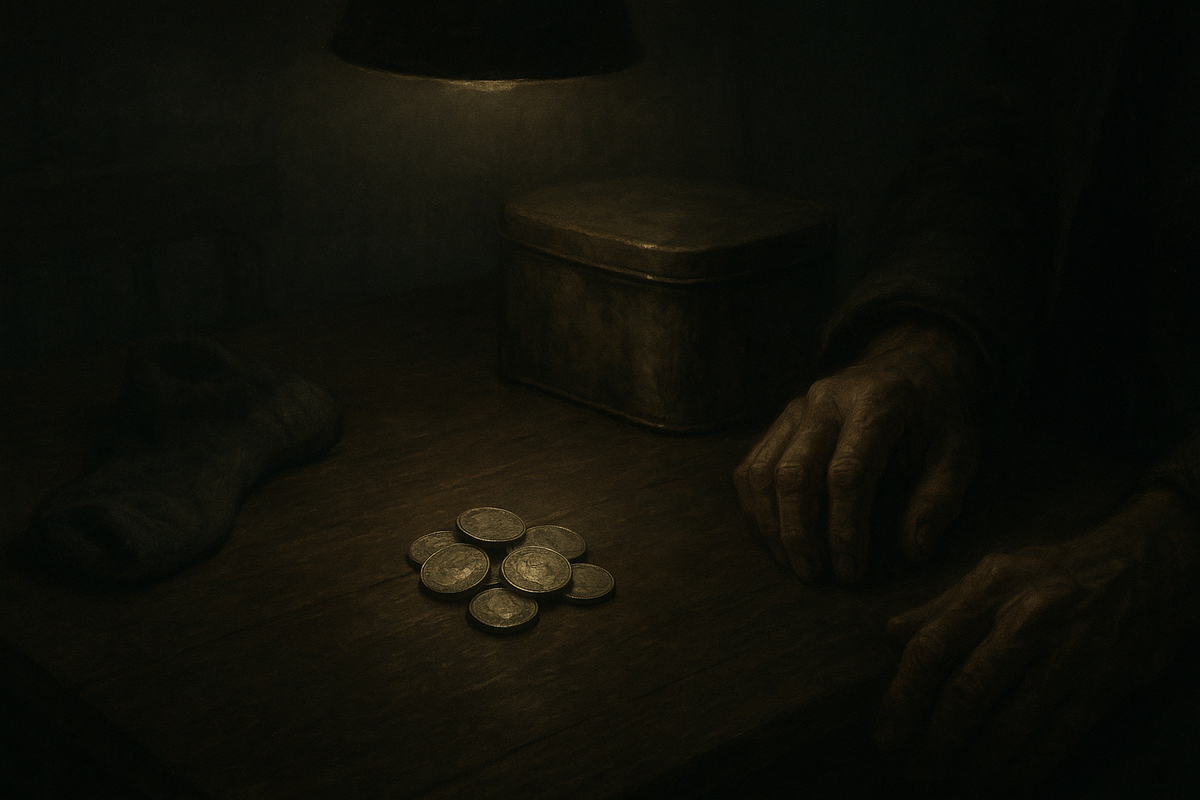
There is a thing you can still hold in your hand. In this whole rotten arrangement, in a world of numbers on a screen that a stranger can change while you sleep, there remains one honest object left to a man, and it is heavy, and it is cold, and it does not care what the bank says. I am talking about silver. And I am talking about it today because I have learned — at a cost I will come to — exactly how much they do not want me to.
Let me tell you first about a man braver than I am. His name is Dave Silver, and yes, I have heard the jokes, and no, the name is not the point.
Dave has been saying, plainly and without fear, a thing that stopped me cold the first time I heard it. He says: “It will be illegal to buy silver.” Just that. Not shouted. Stated. The way you would tell a man his roof was on fire — quietly, because the fact does the shouting for you.
Now. A lesser mind hears that and laughs. A lesser mind says: illegal to buy a lump of metal, Roy, don't be soft. And I want you to sit with why they laugh. Because I have sat with it, at the kitchen table, for the better part of a fortnight, and here is where the sitting took me.
You do not make a thing illegal because it is worthless.
You make a thing illegal because it works.
Follow me, now, because the working is the whole thing and I will not skip it. Nobody is passing laws against buttons. Nobody has ever kicked a door in over a jar of gravel. The law only ever comes for the things that give a man leverage they cannot switch off — and silver, real silver, in your own hand, is leverage they cannot switch off. So when a man like Dave tells you they are one day going to forbid it, he is not warning you it is dangerous. He is confirming, out of their own future mouths, that it is the realest money there is. The threat is the endorsement. They have told you what to buy by telling you what they will one day take.
Ask yourself who benefits from you not owning it. Then ask yourself why every message that reaches you, from every screen they let you have, points gently, endlessly, away from the metal and back toward the number. I did ask. That is the difference between me and a comfortable man.
So I acted. I am nothing if not a man who acts.
There was a coin fair, the back room of a hotel out past the ring road, a Saturday, tables and green baize and men with loupes who did not make eye contact. I went with intent. I went with, I will be honest with you, a sum of money I had raised by parting with a thing I will not name here because Sharon reads this and it was, technically, half hers. And I bought silver. Proper silver. A little stack of it, the old coins, the milled edges, the weight of them in the palm like a full stop at the end of a long and stupid sentence. I drove home a serious man. A man with ballast. A man they could no longer fully reach.
And then, over the months that followed, a strange and instructive thing began to happen to my silver.
It was worth less.
I do not mean it vanished. I mean I took two of the coins back — to a different fellow, a shop this time, off the high street — and the number he offered me for them was smaller, meaningfully smaller, than the number I had so proudly handed over at the green baize. I stood in that shop and I felt the floor of the world tilt very slightly, and I understood, all at once, what I had walked into.
They are suppressing the price.
Of course they are. Look at it. The one honest thing a man can hold, the one lump of leverage they cannot switch off — and the moment I hold it, its number begins to sink, quietly, patiently, punishingly, like a hand on the back of a drowning man's head. Not a crash. A crash you would notice. A crash would be honest. This was a slow, deliberate leaking-away, calibrated precisely to teach the man who dared to hold real money that he would be poorer for the daring. That is not a bad afternoon at a coin fair. That is a message. And it was addressed, by name, to me.
Because that is how it works now. They cannot make it illegal yet — Dave is right, that is coming, but it is coming — so in the meantime they simply make it hurt. They bleed the number down on the men who buy in, so the flock looks over, sees the fool with his heavy pockets getting quietly poorer, and scurries back to the safe warm screen where the number only ever goes the way they want. I was not fleeced. I was made an example of. There is a dignity in that which I am still, frankly, learning to carry.
I put it to Barry, Thursday, in the Alexandra. I said, Barry, they've knocked the value out of my silver to punish me for owning it. And Barry looked at me for a long moment and said, “Roy, or you bought it off a bloke at a markup and coin shops pay you less than they charge you, that's just how it —” and I stopped him there, because I could hear it happening. I could hear the exact soft sentence they have installed in men like Barry to say to men like me. Word for word. As if read off a card. Do you see? Do you see what they've done to Barry? He believes the shop. He believes the shop over his own friend. I bought the next round. It seemed the honest thing, with real money, while I still can.
They are very good, you see, at making the truth arrive dressed as your own foolishness. That is the masterstroke. A man loses on the metal and they have trained him to blame himself — “markup,” “spread,” “I overpaid” — and never once to ask the only question that matters, which is: who benefits from me believing that? Not the man in the shop. Someone standing a very long way behind the man in the shop.
I am not a clever man. I have been told so, kindly and unkindly, and I have stopped minding. I am something rarer than clever. I am a man who bought the real thing, watched them take a portion of it back through the walls, and understood — where a cleverer man would have simply felt embarrassed — that the loss was the proof. The tarnish on those coins in the sock at the back of the drawer is the fingerprints of the machine. I would not polish it off for the world.
So here is where the sitting leaves me, and I put it to you as plainly as Dave put it to me. When they tell you not to buy silver — with a law, or a laugh, or a shop's low number, or a friend's borrowed sentence — they are not steering you away from a mistake. They are steering you away from money. And there is one clip of Dave's I have watched more times than I will admit, near the end, where he goes quiet for a second before he says the thing about the confiscation, and in that second, if you know how to listen, you can hear the whole reset coming. I will not tell you the timestamp. You are not ready, and neither, if I am honest, is the drawer.
Buy the real thing. Hold it in your hand. And when it is worth a little less on the Monday, do not, whatever you do, ask the shop why.
Ask yourself who benefits.
— R.S.